Understanding the Risk
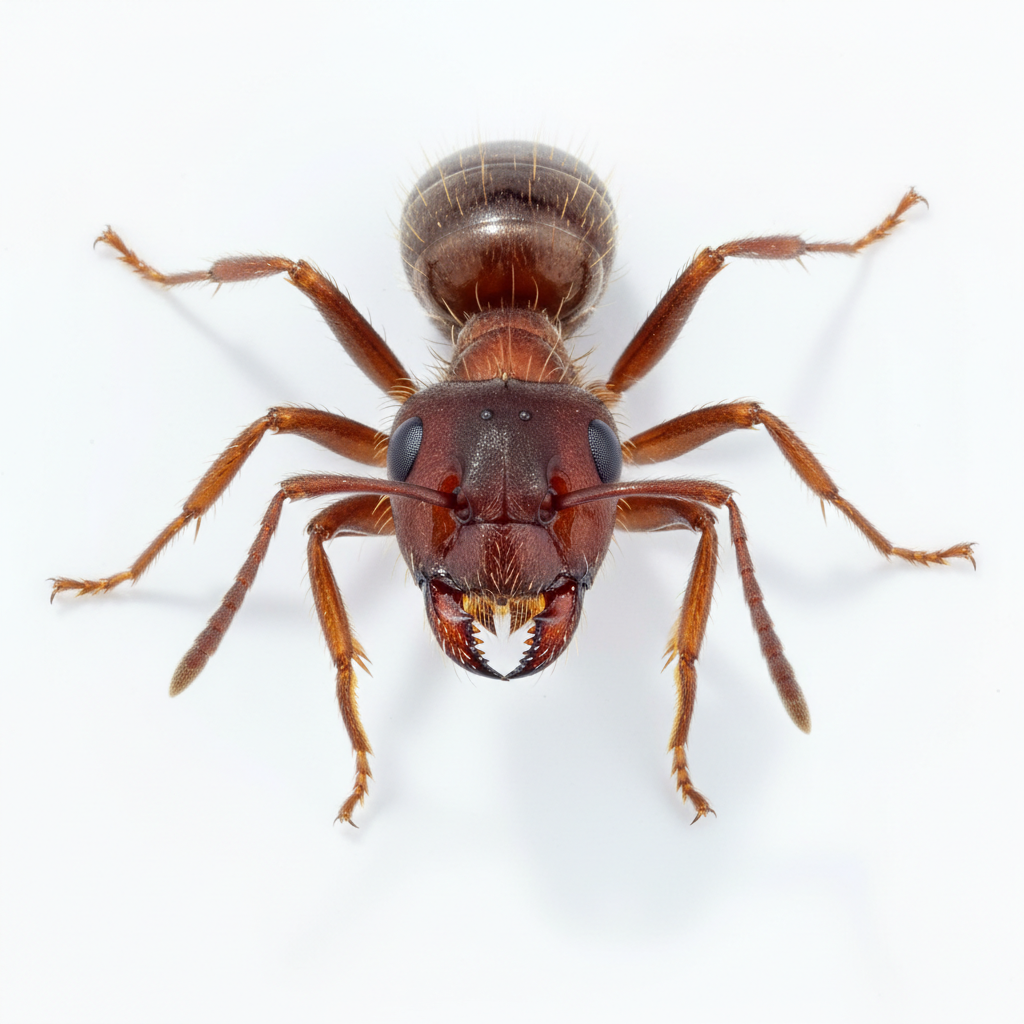
Ants are among the most persistent structural invaders in the Northeast. Carpenter ants tunnel through wood framing to build nests, causing damage that rivals termites. Odorous house ants contaminate food surfaces, while pavement ants undermine walkways and slabs.
A single colony can number in the tens of thousands, with satellite nests spread across multiple areas of a property. Store-bought sprays kill visible foragers but leave the queen intact — guaranteeing the colony returns within days. True elimination requires locating and treating the nest structure directly.
Signs of Infestation
Sawdust-like frass piles near baseboards or window frames — evidence of carpenter ant excavation.
Hollow-sounding wood when tapped, indicating internal tunneling by nesting carpenter ants.
Winged swarmers emerging indoors in spring — a sign of a mature colony ready to expand.
Trails of ants following pheromone paths along baseboards, countertops, or exterior walls.
Faint rustling sounds inside walls or wooden structures during quiet evening hours.
Our Ant Treatment Process
Colony Identification & Mapping
We trace foraging trails back to nest sites using non-invasive detection, mapping every satellite colony on your property before treatment begins.
Targeted Nest Elimination
Clinical-grade transferable baits and direct nest treatments reach the queen and brood — collapsing the colony at its source rather than just killing scouts.
Structural Perimeter Barrier
A protective treatment boundary is applied around your foundation to prevent new colonies from establishing and foraging ants from re-entering.
Monitoring & Prevention
Strategic bait stations and quarterly inspections ensure the colony stays eliminated and new ant activity is caught before it spreads.
Why Choose GNM for Ant Control
30-Minute Response
We contact every lead within 30 minutes — pests wait for no one.
Licensed & Insured
Certified technicians trained in the latest clinical protocols.
Family & Pet Safe
Targeted formulations that protect what matters most.
Request Your Ant Quote
Tell us what you're seeing and a GNM specialist will reach out within 30 minutes. No obligation.